
Average Height of an NHL Goalie: About 6 Foot 3
NHL goalies average about 6 ft 3 in (190 cm). See the calculation for 2025–26 participants, the height distribution and what the benchmark means.
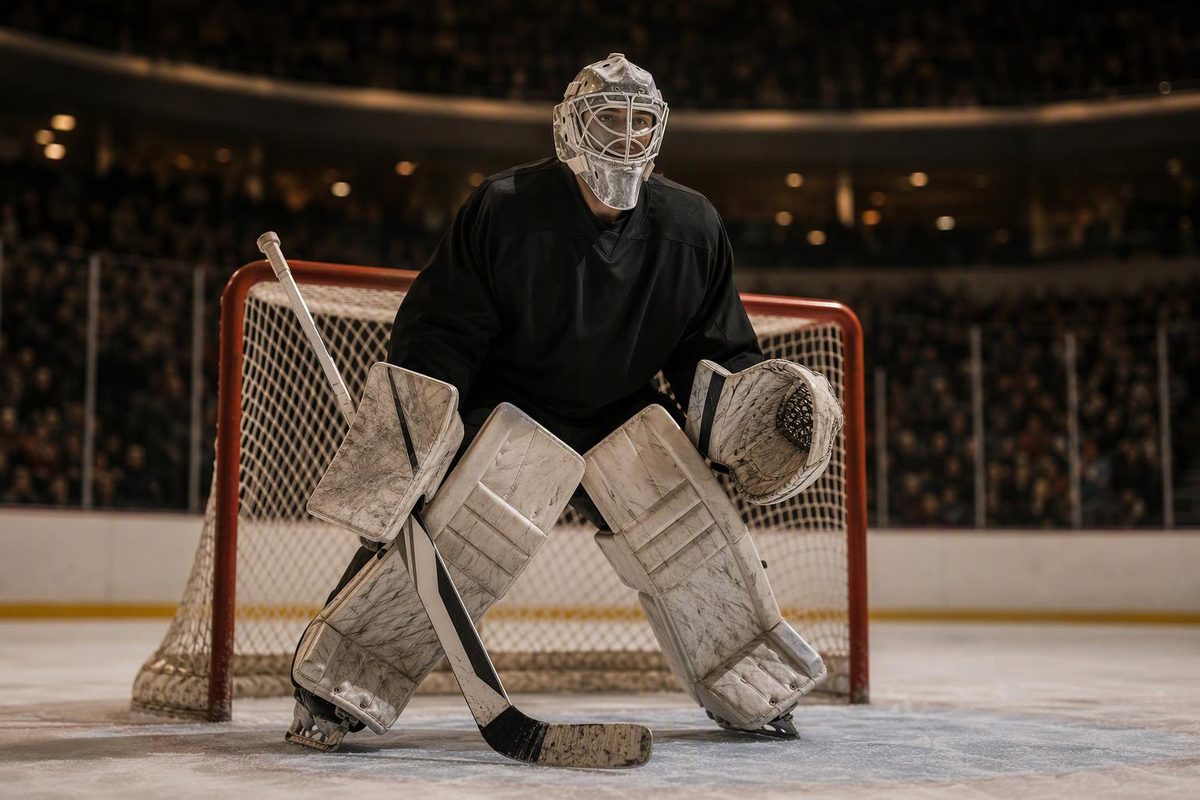
The average height of an NHL goalie is about 6 feet 3 inches, or 190 cm. Counting each of the 98 goalies who appeared in the 2025–26 regular season once, their NHL-listed heights average 74.88 inches—6 feet 2.88 inches, or 190.2 cm. That is our calculation from the league’s goalie Bio Info report, using listings retrieved October 4, 2026.
The rounded answer is also consistent with The Athletic’s early-season 2025–26 analysis: its smaller sample of 62 goalies had a reported average of 75.0 inches, or 6-foot-3.
How the average is calculated
For the full-season participant sample, the calculation is:
7,338 total inches ÷ 98 goalies = 74.88 inches per goalie.
This is an unweighted player average. A goalie with one appearance counts just as much as a goalie with 60 appearances. It is not an average of team averages, a starters-only figure, or a measure weighted by minutes played.
The season determines who is included; the retrieved NHL bio listings supply their heights. Those listings are not necessarily frozen measurements from the start of that season. The report does not specify a height-measurement protocol: the decimal places above describe the calculation, not the precision of individual measurements. These are listed player heights, not a measure of their height on skates.
That definition matters when comparing numbers elsewhere. Opening-day rosters, all season participants and goalies under contract are different populations and can produce different averages.
How NHL goalie heights are distributed
The mean describes the group, but the distribution gives a better sense of how common each height is:
| NHL-listed height | 2025–26 goalies |
|---|---|
| 6 ft 0 in or shorter | 7 |
| 6 ft 1 in | 15 |
| 6 ft 2 in | 19 |
| 6 ft 3 in | 21 |
| 6 ft 4 in | 19 |
| 6 ft 5 in | 11 |
| 6 ft 6 in or taller | 6 |
| Total | 98 |
Counts calculated from the same NHL Bio Info report.
Both the median—the middle height—and the mode—the most common listed height—were 6-foot-3. Just over half the sample, 51 of 98 goalies, stood between 6-foot-3 and 6-foot-5 inclusive.
The sample ranged from 5-foot-11 to 6-foot-7. Juuse Saros and Hunter Shepard were listed at the lower end; Mads Sogaard was at the upper end. Those are extremes within this season’s participants, not all-time records.
Does a goalie need to be 6-foot-3?
An average is not a minimum height requirement or a performance score. The same sample includes Dustin Wolf at 6-foot and Saros at 5-foot-11.
Height also does not dictate a single positioning strategy. In an NHL.com analysis of Wolf’s play, Saros challenged the generalization that smaller goalies must always play farther out. He emphasized choosing when to challenge because greater depth also increases the distance a goalie must travel on lateral plays. Wolf described simplifying his movement by playing deeper in many situations.
For players and coaches, use 6-foot-3 as context for the adult NHL population—not as a youth development target. To evaluate goaltending performance, pair physical measurements with evidence about saves and technique, such as goals saved above expected versus save percentage or a consistently defined rebound-control log.