
Is Hockey Overtime Sudden Death? Yes in the NHL
NHL overtime is sudden death: the first goal wins. Compare regular-season and playoff formats, and learn why shootout sudden death works differently.
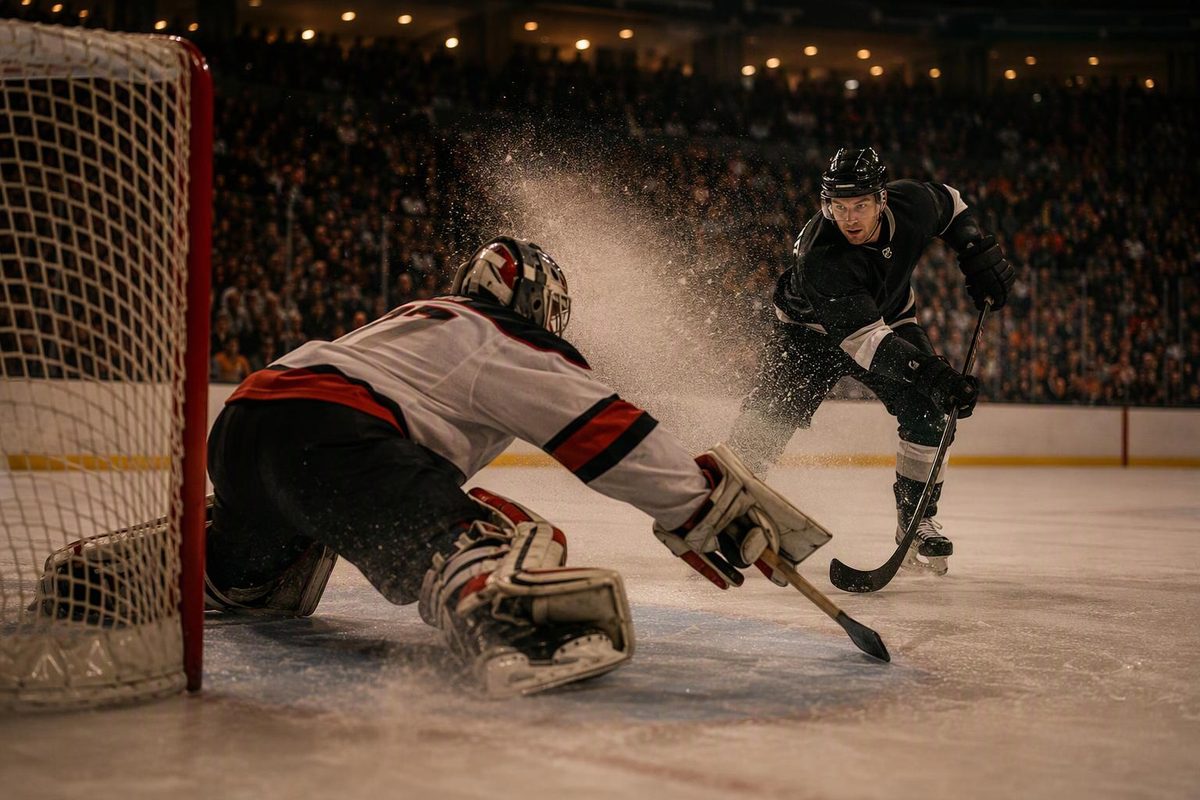
Yes—NHL overtime is sudden death: the first goal wins, and the game ends without the other team getting a chance to answer. That applies in both the regular season and the Stanley Cup Playoffs. What changes is the overtime length, the number of skaters and what happens if nobody scores. NHL Rules 84.1 and 84.5
“Sudden death” describes how the game ends, not how long overtime must last.
Regular-season vs. playoff overtime
The NHL’s 2026–27 rules use these formats:
| Format | Overtime length | Normal on-ice strength | If nobody scores |
|---|---|---|---|
| NHL regular season | One period of up to 5 minutes | 3-on-3 skaters, plus a goalie per team | A shootout decides the winner |
| Stanley Cup Playoffs | Repeated periods of up to 20 minutes each | 5-on-5 skaters, plus a goalie per team | Another overtime period is played until a goal ends the game |
The time limits and ending conditions come from NHL Rule 84; the playoff 5-on-5 format is also described in USA Today’s overtime explainer.
For example, suppose regulation ends 2–2 and a team scores 40 seconds into overtime. The final score is 3–2. The remaining overtime time is not played—whether it is a regular-season game or a playoff game.
For more on the postseason format, see why there are no shootouts in the NHL playoffs.
The skater counts in the table are the normal formats, not a guarantee for every shift. Penalties can change them. In regular-season overtime, a one-team minor penalty normally produces a 4-on-3 advantage rather than 3-on-2; neither team is reduced below three skaters. NHL Rule 84.3
Shootout “sudden death” works differently
A shootout is a separate tiebreaker, not another period of open play. Each team initially gets three attempts, unless the result is settled earlier. If still tied after those attempts, the NHL rulebook calls the next stage a “sudden death” format. NHL Rule 84.4
Here, the first successful shot does not automatically end the game. The teams must have equal opportunities in that round:
- If both score, the shootout continues.
- If neither scores, it continues.
- If one scores and the other does not, the scoring team wins.
That is the key distinction: an overtime goal ends live play immediately; a sudden-death shootout round gives both teams an attempt.
Does this apply to every hockey league?
Do not assume every competition uses the NHL format. For international, youth or recreational hockey, check the applicable league or tournament rules for overtime length, skater count and the next tiebreaker. If the rules specify sudden-death overtime, the deciding principle is the same: the first overtime goal wins.