
How Long Is a Hockey Game? NHL, International and Youth Timing Explained
Hockey has 60 minutes of regulation play, but an NHL game typically occupies about 2.5 hours. See how stoppages, intermissions and overtime add time.
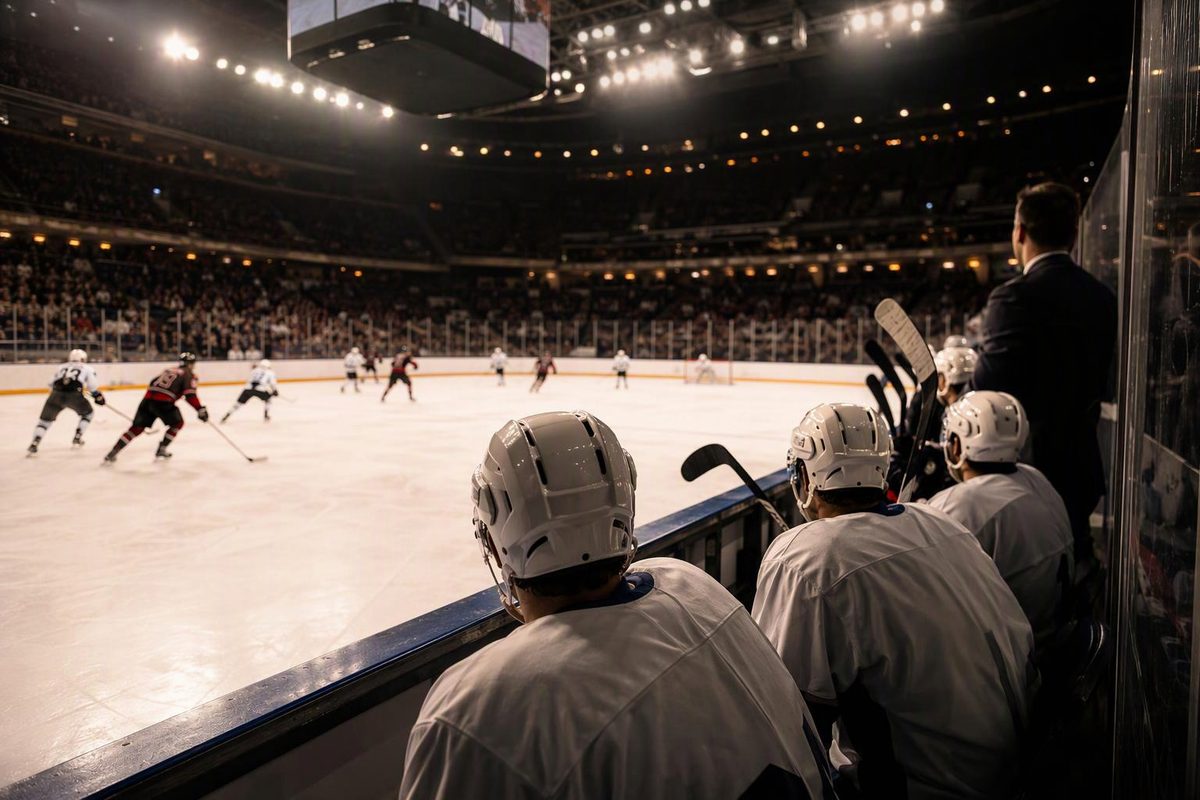
A standard ice hockey game has 60 minutes of regulation playing time, divided into three 20-minute periods. In real time, an NHL game typically occupies about 2½ hours from the opening faceoff to the final horn. That is a planning estimate, not a rule-defined duration: overtime, reviews, injuries and other delays can extend it.
The difference is that hockey uses a stop-time clock. When officials stop play, the game clock also stops, so 20 minutes on the scoreboard takes considerably longer than 20 minutes on a watch.
| Game or format | Regulation playing time | Practical time to allow |
|---|---|---|
| NHL regular-season game | 3 × 20 minutes | About 2½ hours; longer if tied or delayed |
| IIHF international game | 3 × 20 minutes | Often a similar event window, but check that competition’s schedule |
| Youth or recreational game | Set by the competition | Check period length, clock format and rink curfew |
| NHL playoff game | 3 × 20 minutes, then repeated overtime periods if tied | No fixed maximum |
Why 60 minutes becomes about 2½ hours
The 60-minute figure measures only regulation playing time. It excludes:
- two intermissions;
- stoppages for goals, penalties, icing, offside and pucks out of play;
- faceoff setup and player changes;
- scheduled broadcast breaks;
- video reviews and injury delays; and
- overtime or a shootout when required.
For a 7 p.m. NHL start, a finish around 9:30 p.m. is a reasonable estimate, but it is sensible to leave extra time for a tied game and for exiting the arena.
The structure is three regulation periods—not four quarters. See how many periods are in an ice hockey game for a closer look at that distinction.
NHL game length
The NHL rulebook defines regulation as three 20-minute periods of actual playing time. It also provides for intermissions and ice resurfacing between periods. Those rules turn one hour on the game clock into a much longer event (NHL Official Rules 2024–25).
If an NHL regular-season game is tied
A tie after regulation can add:
- a short break;
- up to five minutes of three-on-three sudden-death overtime; and
- a shootout if neither team scores.
The shootout begins with three attempts per team and continues one round at a time if the score remains tied. Because overtime can end on its first shot while a shootout can continue beyond the initial three rounds, there is no exact wall-clock duration for a tied regular-season game (NHL Rule 84).
NHL playoff games can run much longer
The Stanley Cup Playoffs do not use a shootout. If regulation ends tied, teams play full 20-minute sudden-death overtime periods until somebody scores (NHL Rule 84.5).
A goal early in the first overtime may add only a short period of play. Multiple scoreless overtimes can push the finish several hours beyond the scheduled start, so playoff hockey has no predetermined maximum duration.
International hockey timing
IIHF rules also define a standard game as three 20-minute periods of actual playing time (IIHF Official Rule Book 2025–26). The overtime format depends on the competition and stage of the tournament.
That means the regulation answer remains 60 minutes, but the total event time is not universal. Preliminary rounds, elimination games and medal games may use different overtime procedures. Check the event regulations when an exact end time matters.
How long are youth and recreational hockey games?
There is no single answer. Youth, adult and recreational competitions may schedule shorter periods, use running time in specified situations, abbreviate intermissions or impose a hard rink curfew. USA Hockey’s 2025–29 rules expressly recognize time-curfew games, while the competition’s own rules determine the schedule (USA Hockey Rule 636).
Before estimating the finish time, check:
- the number and length of periods;
- whether the clock uses stop time or running time;
- the overtime format; and
- the scheduled ice-slot end or curfew.
In short: regulation NHL and IIHF hockey lasts 60 playing minutes, an NHL game usually needs about 2½ hours of real time, and youth or recreational timing depends on the competition.