
Twenty Miles an Hour Is Routine, Twenty-Three Is Rare Air: What Player Tracking Says About Skating Speed
NHL tracking data puts top skating bursts above 20 mph, with the fastest players touching 23–24 mph. Here's what the speed numbers actually measure.
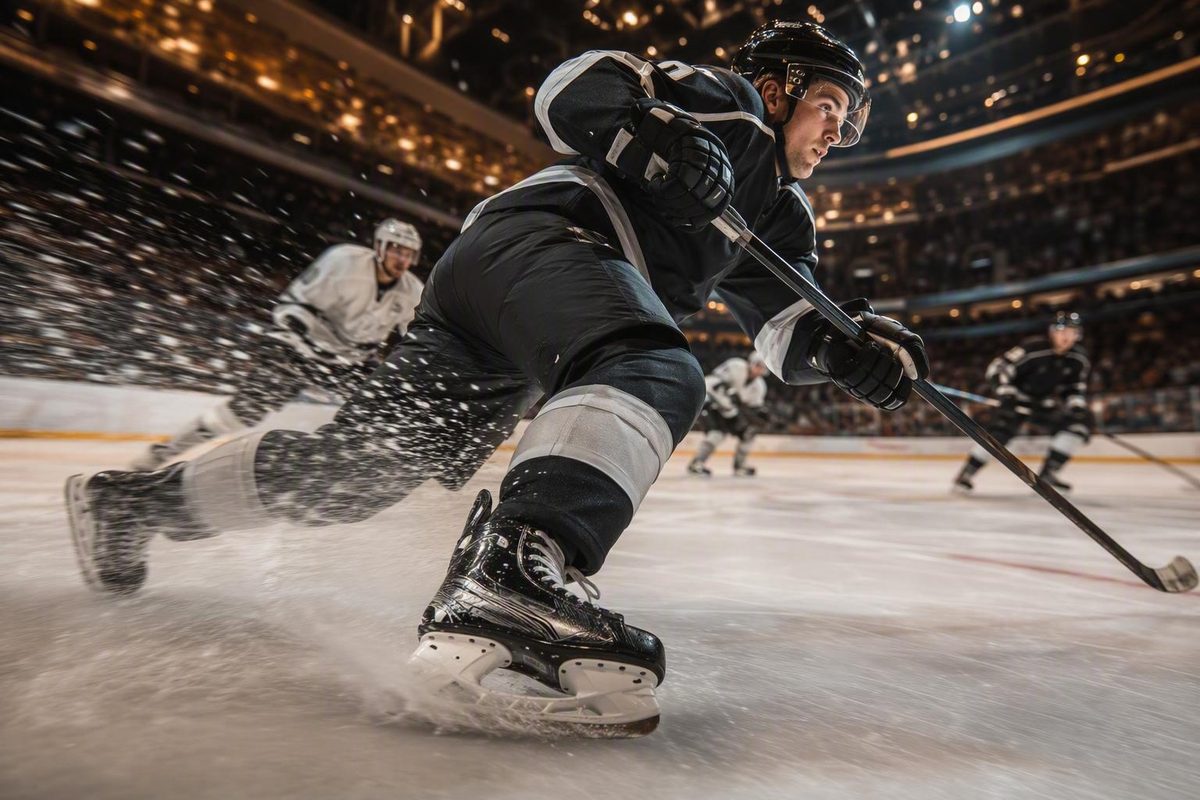
Until the NHL put tracking chips in pucks and sweaters, skating speed was folklore — every league had a guy who was “the fastest thing on ice,” and no numbers to argue with. The league’s EDGE tracking data ended the argument. Here is what the measurements actually say.
The headline numbers
NHL EDGE data, published since the 2021–22 season, records every skater’s maximum sustained skating bursts. The shape of the distribution:
- 18–20 mph (29–32 km/h) — a strong NHL top speed. Most regulars hit 20 mph at least once a season.
- 20–22 mph (32–35 km/h) — genuinely fast. Recording several 20+ mph bursts per season marks a player as one of the quicker skaters on his team.
- 22+ mph (35+ km/h) — elite, produced by a small group of players league-wide each season. Speed-demon wingers and rushing defensemen live here.
- 23–24 mph (37–38.6 km/h) — the measured ceiling. Connor McDavid’s fastest tracked bursts sit in this band, which is why the broadcast graphic appears about twice a season. The league publishes per-player speed pages at NHL EDGE.
For scale: an open-ice defensive-zone-to-attacking-zone rush at 22 mph covers the 200-foot rink in just over six seconds.
What the number measures — and what it doesn’t
Tracked “top speed” is a burst measurement: the best instantaneous speed a player reaches in open ice, usually on a breakaway, a long change, or a backcheck. It is not average game speed — which, counting shifts, stoppages, and glides, sits far lower — and it is not acceleration, which many coaches consider the more game-relevant skill. Two players with identical 21 mph ceilings can be entirely different skaters if one reaches 18 mph in three strides and the other needs seven.
Context: how fast is that, really?
Elite speed skaters exceed 30 mph on long track — but on hollow-ground hockey blades, in 20 pounds of equipment, holding a stick, with a puck, 23 mph is extraordinary. Recreational adult players typically top out between 10 and 15 mph; strong junior players reach the high teens. The gap between beer league and the NHL’s floor is roughly the gap between the NHL’s floor and McDavid.
Why the numbers matter beyond trivia
Speed data changed roster-building arithmetic. Teams now draft and deploy against measured burst and acceleration profiles rather than the eye test, and the league-wide trend since tracking began is unambiguous: the slow NHL regular is disappearing. The folklore era had it half right — the fastest guy really was fast. Now we know exactly how fast, and everyone else is catching up.